
Some skin spots look harmless… until they aren’t. Learn how to tell the difference between normal marks and signs of skin cancer — early detection can save lives. Tap to see what to look for.

Skin Cancer vs Harmless Spots: Can You Tell the Difference?
Some skin spots look innocent — until they aren’t. And the scariest part? The dangerous ones often look similar to harmless marks you’ve seen a hundred times before.
That’s why early detection is not just important — it’s life-saving.
Stay with this breakdown, because the differences you’ll learn below might help you catch something serious before it becomes deadly
What Do Skin Cancers Actually Look Like?

There is no definitive description of what skin cancer looks like, so becoming familiar with your own skin and regularly self-checking your body for signs of change is the best way to catch skin cancer early.
Keep an eye on:
-
spots that look different to others on your body
-
spots that changed in size, shape, colour, or texture
-
sores that itch, bleed, or don’t heal
If you notice any of these signs,
Types of Cancerous Spots
There are three common types of skin cancers—basal cell carcinoma, squamous cell carcinoma, and melanoma.
Each one looks different… and each one comes with its own warning signs.
Let’s break them down.
Basal Cell Carcinoma (BCC)
:max_bytes(150000):strip_icc()/VWH-DermnetNZ-DroolRash-01-f4059b13d02e46a692b412981c5000c9.jpg)
Original content preserved:
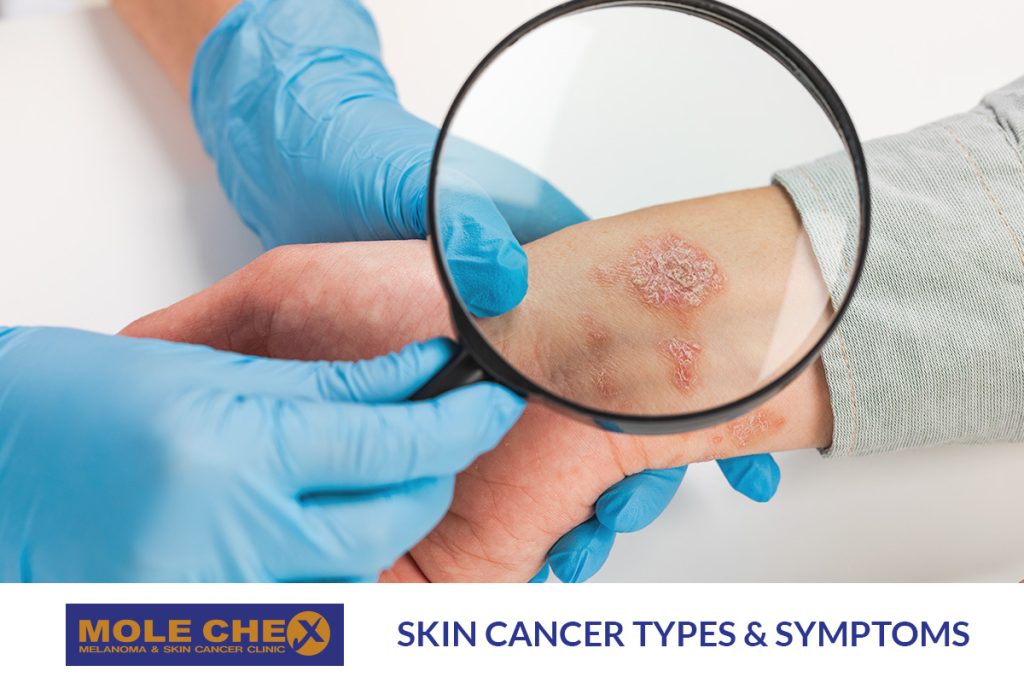
Image of a Basal Cell Carcinoma skin spot.
Basal cell carcinoma (BCC) accounts for most (around 70 per cent) of all keratinocyte cancer (or non-melanoma skin cancer) diagnoses. These types of skin cancers grow slowly over months or years and having one BCC increases your risk of developing another.
BCC usually develops on sun-exposed areas, although they can appear anywhere on the body. You might first notice it as a pearly or shiny lump, or scaly area that is a pale fleshy tone, pink or darker red in colour. This type of cancerous spot can become inflamed and ulcerate, and some may partially heal then flare up again.
See your doctor if you suspect you have a BCC.
Squamous Cell Carcinoma (SCC)
Original content preserved:
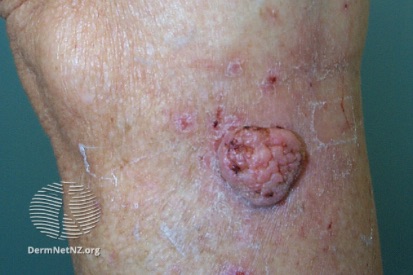
Image of squamous cell carcinoma
Squamous cell carcinoma (SCC) accounts for about 30 per cent of remaining keratinocyte cancer diagnoses. These skin cancers can grow very quickly over the course of weeks or months, and are more common as you get older. Although rare, they do have the ability to spread if not treated early, particularly if they develop on the face.
SCC usually develops on sun-exposed areas, although they can appear anywhere on the body. You might first notice it as either a thickened red, scaly or crusted spot, or a rapidly-growing lump. You may notice this type of cancerous spot bleeds and becomes inflamed and is often tender to touch.
See your doctor if you suspect you have SCC.
Melanoma (The Most Serious Type)
Original content preserved:
Image of melanoma skin spot
Melanoma is not as common as BCC or SCC, but it is considered the most serious as it is more likely to spread if not caught early.
Melanoma can develop anywhere on the body, so it’s important to check your whole body regularly, including places not often exposed to the sun. You might first notice melanoma as a new spot or an existing spot that has changed in colour, shape or size over several weeks or months. It can have either a flat or raised surface and may have an irregular or poorly defined border. Melanomas can also be more than one colour.
Don’t delay in seeing your doctor if you suspect you have a melanoma.
Nodular Melanoma (Fast-Growing & Aggressive)
Original content preserved:
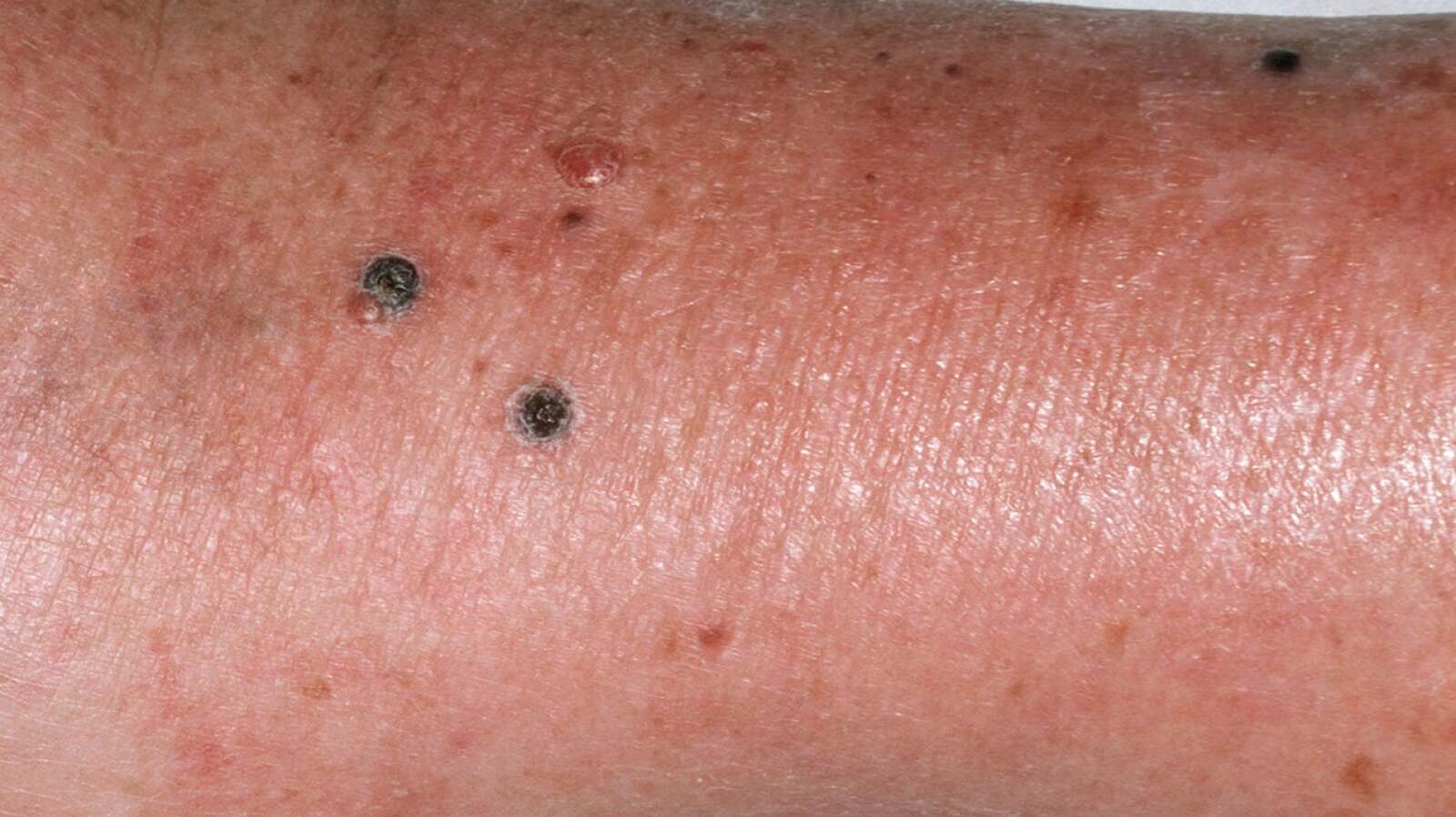
Image of nodular melanoma skin spot
This is a fast-growing and aggressive form of melanoma that can spread quickly into the lower layer of the skin and so early detection is particularly critical.


